info@rcn.si
 04 555 81 00
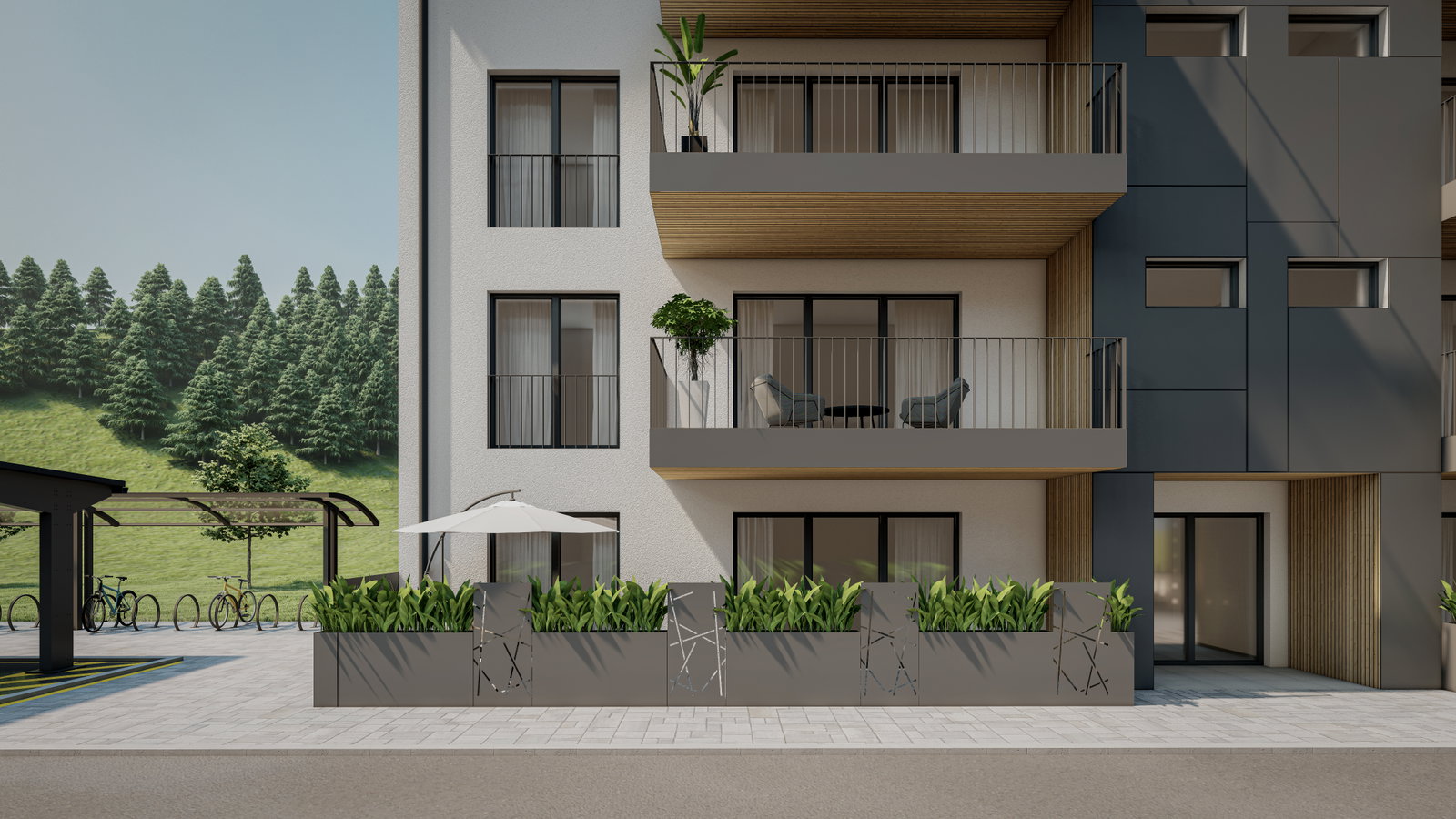
The term "sustainability" is everywhere today — but what does it actually mean when we talk about the apartment you will live in for the next thirty years? It’s not just a slogan. It’s the amount on your bill, the temperature in your bedroom on a cold February morning, and the awareness that your living leaves as little footprint as possible.
About this building: the first and most important decision
Energy efficiency doesn’t start with smart devices — it starts with the wall. A facade system with 20 cm of mineral wool and triple glazing with a low Uw-factor ensures that heat stays in winter where you want it: inside. In summer, it works just as effectively in the opposite direction.
Ventilation with heat recovery: fresh air, no costs
One of the most important yet least visible systems in the building is the heat recovery ventilation system. Old, polluted air leaves the apartment and in the process gives off 85–90% of its heat to the fresh outside supply. The result: clean, fresh air all the time without opening windows — and without losing the energy you’ve already paid for.
Renewable sources and energy sharing
On the roof of the building, a photovoltaic system with a total capacity of 42 kWp is installed. The energy produced by the panels during the day is directly shared among the residents — for common areas, elevators, bike storage, and charging stations for electric bikes. The surplus is fed into the grid, reducing overall operating costs.
Heating and cooling are provided by air-water heat pumps, whose annual efficiency factor (SCOP) exceeds 4 — meaning that for every unit of electricity, you receive four units of heat.
How much do you actually save?
Savings are not just a theory — they are a calculable reality. The following estimates are based on a typical 78 m² apartment compared to standard new construction without passive measures.
Water and surroundings: less is more
The green areas around the building are planted with native vegetation that does not require watering. Rainwater from the surfaces is collected in an underground reservoir and used for watering common green spaces. A small decision — a noticeable saving on overall costs.